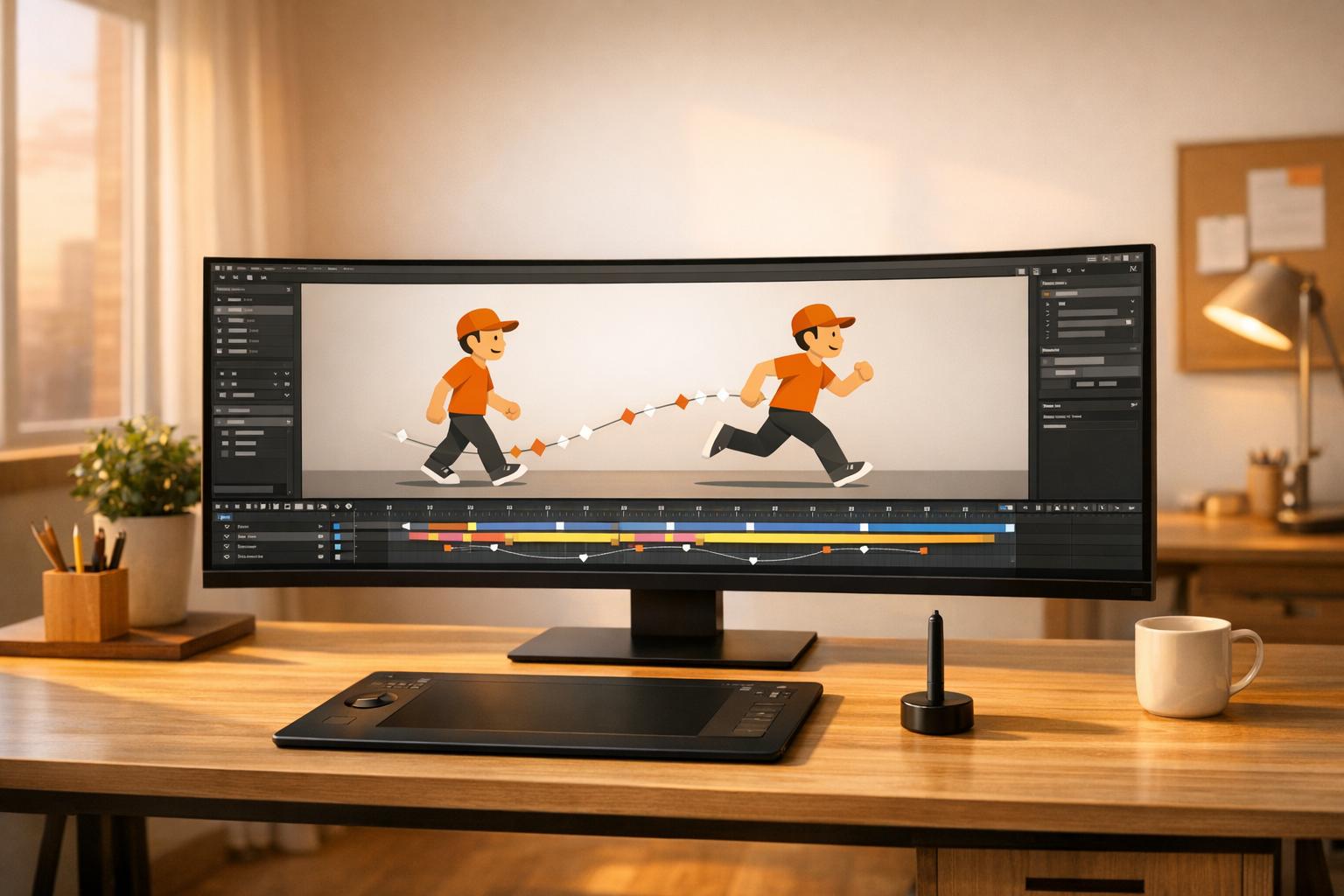
2D animation is a powerful tool for brands looking to communicate messages in a visual and engaging way. This method allows you to create unique stories, simplify complex concepts, and build emotional connections with your audience. Key highlights:
- Growing popularity: By 2022, 82% of internet traffic was generated by video, and 65% of companies were using corporate animation.
- Visual flexibility: 2D animation allows you to customize characters and settings to align with brand identity.
- Success stories: Brands like Headspace and Facebook have used 2D animation to create impactful, accessible content.
With techniques like frame-by-frame animation, keyframes, and motion graphics, you can transform ideas into effective visual narratives. 2D animation stands out as a practical, efficient solution for branding, explainer videos, and social media content.
Core Principles of Brand Storytelling with 2D Animation
Now that we understand the fundamentals of 2D animation, it’s time to explore how these principles can bring compelling brand narratives to life. Effective storytelling through 2D animation goes beyond technique — it requires visual elements to convey values, simplify messages, and create a genuine connection with the audience. Three central pillars underpin this approach and define the impact of any animated brand narrative.
Creating a Visual Identity
Visual identity is what makes a brand instantly recognizable. The choice of colors, illustration styles, and graphic elements should reflect the company’s personality and values. For example, a limited palette — like black, white, and red — can convey tension or conflict, while a transition from dark tones to vibrant colors can symbolize a “healing process” or the positive impact of a product.
Visual consistency isn’t just an aesthetic concern. It’s a powerful strategy for strengthening brand recognition — ensuring that every frame contributes to a solid, memorable visual presence.
Simplifying Complex Ideas
One of 2D animation’s greatest strengths is its ability to translate abstract concepts into clear, accessible stories. Through visual metaphors and fluid transitions, you can explain complex topics — such as gravitational waves, legal processes, or medical concepts — in a captivating and understandable way. Elements like animated typography and geometric shapes come to life, allowing dense information to be presented in a light, engaging format.
This approach transforms complicated topics into enjoyable visual experiences — keeping the audience’s attention from start to finish.
Building Emotional Connections
Animated characters have a unique ability to create deep emotional bonds. Felippe Silveira, CEO of MOWE Studio, explains:
“Characters are the visual elements that create the strongest human connection of all.”
Because they’re stylized and less detailed than real people, these characters promote inclusion — allowing audiences from different backgrounds to identify with the narrative.
This effect is amplified by the phenomenon of pareidolia — the human tendency to recognize faces in objects. Animation uses this natural instinct to create instant connections, even with abstract or non-human characters. Unlike real actors, animated characters offer total control over appearance and avoid negative associations — helping brands maintain a positive, consistent image over time.
Core 2D Animation Techniques
Mastering the basics of 2D animation is essential for creating visual narratives that stand out — balancing creativity, budget, and deadlines.
Here are some of the key techniques that turn ideas into motion.
Frame-by-Frame Animation
Frame-by-frame animation, or cel animation, is one of the most traditional and artisanal techniques. Each frame is drawn by hand — resulting in fluid, natural movement capable of conveying powerful emotional weight. This method requires between 12 and 30 drawings per second, which can be demanding in terms of time and resources, but offers unparalleled creative freedom.
Felippe Silveira, CEO of MOWE Studio, explains the potential of this technique:
“Frame-by-frame animation allows characters to move through X, Y, and Z axes much more freely, enabling complex camera movements and some body distortions.”
This approach is often used for high-impact moments — such as action scenes or intense emotional shifts. To balance costs, many brands combine frame-by-frame for “hero” moments with digital techniques for less central scenes.
As a complement, keyframe animation offers a more practical and efficient solution.
Tweening and Keyframe Animation
Keyframe animation is a technique that speeds up production by allowing software to generate movements between two defined points. It typically uses methods like cut-out or rigging (digital skeleton), ensuring faster production without compromising visual quality.
This method is particularly suited to explainer or corporate content, where tight deadlines and leaner budgets are a reality. Simple movements can be enough to convey energy and dynamism — without the complexity of full animation.
Motion Graphics for Branding
Motion graphics bring graphic design elements to life — such as typography, geometric shapes, and logos — creating engaging visual narratives. Raff Marques, Creative Director at MOWE Studio, describes it as:
“Motion Design is the style that adds movement to graphic design elements like typography, geometric shapes, and simple illustrations.”
This technique is especially effective for simplifying abstract concepts and presenting complex data in a visually appealing way. It’s widely used for logo introductions, dynamic transitions, and social media content — combining visual impact with production efficiency. Integrating animation with narration also helps make dense information clearer and more memorable for audiences.
Advanced Techniques for Brand Engagement
After mastering the basics, it’s time to explore more sophisticated methods that transform 2D animations into memorable, emotionally engaging experiences.
Character Animation for Emotional Connection
Characters are crucial for building an emotional connection with the audience. Our natural tendency to recognize faces in objects — known as pareidolia — makes animated characters a powerful vehicle for communicating brand values.
In animation, emotions can be exaggerated — such as oversized tears or intensified expressions — and still feel natural within the animated context, creating lasting emotional impact. Stylized characters also offer greater accessibility, allowing people from different backgrounds to identify with the narrative.
Michelle Connolly, Director of Educational Voice, explains:
“Characters should not just be seen; they should be remembered, reflecting the core values they represent.”
Even on limited budgets, small gestures or subtle movements can bring characters to life without the need for complex animations. Combining techniques like digital rigging with strategic moments of frame-by-frame animation creates visual impact without overextending available resources.
Representing Ideas with Visual Metaphors
With emotionally strong characters, the narrative gains even more depth through visual metaphors that illustrate abstract concepts. Ideas like innovation or sustainability can be represented by symbolic imagery that makes the message more accessible. Felippe Silveira, CEO of MOWE Studio, highlights:
“Animation and movement rely heavily on metaphors to make messages more engaging for the audience.”
One effective technique is morphing — which smoothly transforms one element into another, creating fluid transitions and maintaining continuity between different scenes. When combined with narration, this method helps simplify complex topics, assigning clear meanings to abstract shapes.
The degree of abstraction should be calibrated to the audience. Younger or less product-familiar audiences prefer direct imagery, while more experienced audiences may appreciate symbolic metaphors. Using simple geometric shapes also lets viewers interpret part of the narrative themselves — creating a more personal connection with the brand story.
Storyboarding: The Message Blueprint
The storyboard is the essential blueprint that organizes and integrates all advanced techniques — bridging the initial idea and the final production. It ensures the narrative stays aligned with brand objectives and that every visual element complements the message.
At this stage, decisions are made about which actions require frame-by-frame animation and which can be handled with digital movement — enabling efficient resource management without compromising quality. The storyboard also ensures that colors, shapes, and typography follow brand guidelines — reinforcing long-term visual recognition.
Michelle Connolly emphasizes:
“The character design and storyboarding process in 2D animation is critical, serving as the blueprint for animators to bring characters to life.”
Creating an animatic — a timed sequence of storyboard images — is a valuable practice for testing the narrative’s pacing before moving into animation. Even elements without primary movement should include small variations, like a subtle “wiggle,” to prevent the animation from feeling static and lifeless.
sbb-itb-b3ef44f
Applications of 2D Animation in Branding
2D animation transforms complex concepts into clear, impactful messages — widely used across digital platforms. These applications leverage the principles of visual identity, metaphor, and emotional connection — adapting them to different communication strategies.
Explainer Videos and Tutorials
Explainer videos are ideal for simplifying complex products or services — presenting them in a visual, accessible format. Typically 1 to 3 minutes long, they’re especially useful for startups and tech companies that need to clarify concepts or software functionality.
In the first 5 seconds, capturing the audience’s attention is essential to ensure the video is watched to the end. Using visual metaphors, combined with smooth transitions, transforms abstract topics into clear, memorable messages. Adapting these strategies for social media can also significantly expand brand reach.
Social Media Content
Social media demands short animations — between 6 and 60 seconds — or looping GIFs optimized for platforms like Instagram and TikTok. Visual style consistency is essential for building a strong identity that turns followers into dedicated fans.
With nearly half of people watching more than five videos per day, and video accounting for over 82% of global internet traffic in 2022, 2D animation has become indispensable for capturing attention in a saturated digital environment. An effective strategy involves adapting longer content — like YouTube tutorials — into short formats for Instagram Reels or Stories.
Maintaining consistent visual identity across frequent releases is crucial. Combining techniques like “cut-out” animation with strategic moments of frame-by-frame allows costs to be balanced without compromising visual quality.
Corporate Storytelling
Beyond tutorials and social content, 2D animation is a powerful tool for corporate storytelling. This type of video helps communicate brand mission, values, and identity — building a deeper emotional connection with the audience. Raff Marques, Creative Director at MOWE Studio, explains:
“Content videos aim to use storytelling to position a brand as something more meaningful than its product. They sell the mission and values behind the brand.”
A notable example is Jerónimo Martins’ project “Plastic: from use to abuse,” which used 2D animation to highlight its commitment to environmental issues. This explainer film won the Gold Medal at the International Advertising Competition Golden Award of Montreux 2022.
Today, approximately 65% of companies integrate animation into their marketing plans to engage audiences and communicate messages effectively. Animation allows total control over brand image — avoiding the challenges associated with using real actors and enabling the creation of stylized characters that connect with diverse audiences.
Choosing the ideal visual format to tell a brand story depends on several factors — including budget, deadline, objectives, and the level of emotional connection desired. Each visual medium — 2D animation, 3D animation, and live-action — has its strengths and challenges, which can directly influence message effectiveness.
2D animation is known for its flexibility, more accessible costs, and ability to make complex ideas easier to understand. Felippe Silveira, CEO of MOWE Studio, highlights this advantage clearly:
“Animation has a unique power that surpasses common live-action approaches used in campaigns: it can create the impossible.”
3D animation, on the other hand, offers greater realism and depth — particularly useful for product demonstrations, virtual tours, or technical explanations where precise details and perspectives are essential. Although it requires more resources and time, the Team Lambda at Lambda Films notes:
“Although more expensive and time-consuming than 2D, the investment in 3D animation often pays off with higher engagement and comprehension rates.”
Live-action, using real footage with actors, is effective for creating direct human connection. However, it comes with risks — such as tying brand image to specific individuals, which can limit flexibility.
Format Comparison
| Attribute | 2D Animation | 3D Animation | Live-Action |
|---|---|---|---|
| Cost | Low to medium; more economical | High; requires greater investment | Variable; can be high due to actors and production |
| Production Time | Fast to moderate; easily adjustable | Longer due to complexity | Dependent on scheduling and post-production |
| Realism | Stylized; no realistic depth | High; detailed and immersive | Absolute; portrays the real world |
| Emotional Impact | Strong, through characters and metaphors | High, with engaging detail | Intense, through human performance |
| Best For | Explainer videos, social media, brand storytelling | Product demos and technical explanations | Human stories and real testimonials |
Cooprativa‘s 2D Animation Services
Combining cutting-edge techniques with an award-winning creative approach, Cooprativa integrates 2D animation into its portfolio — offering solutions that blend imagination with concrete results. The agency, which has earned over 150 industry awards and worked with 100+ clients, uses a comprehensive methodology that ensures visual consistency from initial concept to final delivery.
Production Workflow
Cooprativa’s production process follows a structured, multi-stage approach — ensuring every project is aligned with the client’s objectives. It begins with a strategic brief, defining goals, target audience, consumer benefits, and content format — whether for advertising, product launches, social media, or educational materials. From there, the script and moodboard are developed, establishing visual style, color palette, and storyboard.
In the animation and production phase, movements are crafted — including character performance, morphing transitions, and advanced techniques like kinetic typography. The process culminates in sound design and voice-over integration, complemented by background music and sound effects that create an immersive experience. This detailed workflow ensures a balance between creative quality and measurable results.
Creative Quality and Results
Cooprativa’s philosophy — “Zero Fluff, Maximum Impact” — reflects the commitment to delivering clear, impactful ideas. Every dollar invested is directed toward maximizing return — translating into both creative and performance results. The agency’s integrated structure enables fast, efficient launches — with the capacity to develop and deploy campaigns simultaneously across social media, digital platforms, and print materials, maintaining brand cohesion across all channels.
Led by industry professionals with backgrounds at global agencies like Leo Burnett and VMLY&R, Cooprativa applies the highest creative standards to every project. Raff Marques, Creative Director at MOWE Studio, sums up the power of animation:
“Animation allows for a diversity of examples and metaphors to make any subject interesting without breaking the content flow.”
This ability to transform complex topics into captivating visual narratives is especially valuable in a world where video consumption continues to grow — reinforcing the effectiveness of this approach.
Conclusion
2D animation is a powerful tool for brands that want to create memorable stories and build lasting emotional connections with their audience. Mastering these techniques can make all the difference in a competitive market.
Combining creativity and effectiveness, 2D animation allows you to explore ideas without limits — transforming complex concepts into captivating visual stories while maintaining total control over brand identity. It also eliminates the challenges associated with using real actors, providing greater flexibility and consistency. This blend of visual, narrative, and sound elements creates immersive experiences that can turn casual viewers into true brand advocates.
To achieve concrete results, it’s essential to work with an experienced partner. Cooprativa, with its proven integrated approach, ensures every project generates real impact — from initial planning to coordinated execution across multiple channels, preserving brand cohesion at every touchpoint.
Whether launching an innovative product, running a social media campaign, or building a solid corporate narrative, 2D animation offers the flexibility and emotional appeal needed to make your brand stand out in a saturated market. Invest in 2D animation and tell stories that captivate and build lasting audience loyalty.
FAQs
How can 2D animation make complex concepts easier to understand?
2D animation is an excellent way to transform complex ideas into simple, captivating visual narratives. With the help of animated graphics, creative characters, and moving diagrams, it’s possible to explain abstract concepts or processes intuitively — avoiding lengthy, complicated descriptions.
Beyond clarity, 2D animation has the power to create an emotional connection with the audience, making messages easier to remember and more impactful. This method is particularly effective in education, marketing, and business communication — where it’s crucial to convey information quickly and clearly. Animation not only makes difficult topics more accessible, it also increases audience interest and retention.
What are the benefits of 2D animation for brand storytelling?
2D animation stands out as a powerful brand storytelling tool — thanks to its ability to create a strong emotional connection with audiences. This format is not only easy to remember but also accessible, allowing messages to be delivered in an engaging way that leaves a lasting impression. It also offers the ability to create imaginary worlds and simplify complex concepts through appealing visuals — something other media can’t always achieve.
One of its greatest advantages is flexibility. 2D animation can take on many styles — from simple motion graphics to detailed character-driven narratives — easily adapting to different budgets, timelines, and project needs. Another key feature is inclusivity: characters can be designed universally, fostering identification across diverse audiences. This versatility makes 2D animation perfect for campaigns that want to engage emotionally and communicate effectively.
How do you ensure visual consistency using 2D animation?
To ensure a well-defined visual identity with 2D animation, it’s crucial to establish visual guidelines that capture the brand’s essence. Maintaining aligned visual styles, using harmonious color palettes, choosing typography that matches the brand tone, and integrating consistent graphic elements are fundamental steps for building a visual narrative that’s easily recognized and reflects the brand’s personality.
Working with characters, settings, and objects that follow a unified style not only reinforces this consistency — it also helps create a stronger emotional bond with the audience. Applying animations and movements that follow a coherent visual pattern across different projects contributes to a distinctive aesthetic signature — making the brand more memorable and its message more effective.
Related Blog Posts
Let’s Get Started
Tell us about your project and we’ll get back to you within 24 hours